
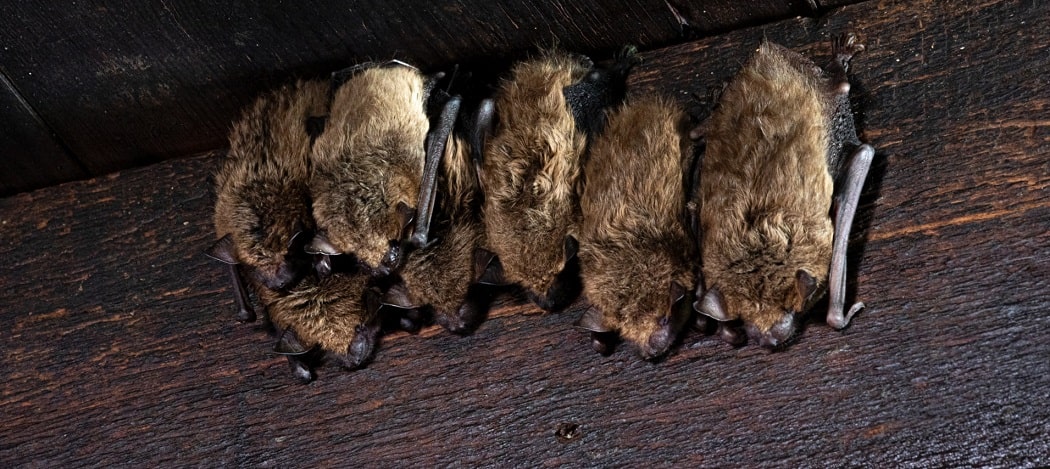
Because there are restrictions on how to humanely and legally remove bats from your home, the best way to get rid of bats is with a bat valve.
Attics have many characteristics that make them an ideal home for bats. Along with people encroaching on their natural habitats through the building of new neighborhoods, roads, and shopping areas, bats in attics have become a common problem for homeowners.
There are six species of bats that are federally protected. It is a federal violation to use chemicals, including insecticides, rodenticides, disinfectants, and mothballs, to kill bats. Most states have restrictions on when bats can be removed. Most states have further regulations on when bat removal should happen.
Many people don’t realize that bats play an important role in Earth’s ecosystem. They pollinate over 500 plant species, including agave, bananas, mangoes, and cacti, and spread seeds for many other crucial plants. In addition, a single bat can eat up to 1,000 mosquitoes in an hour, making bats a highly effective natural insecticide.
Unfortunately, when bats roost in attics, they cause damage and pose health risks. There are no fast or easy DIY methods for how to get rid of bats. However, a wildlife removal company such as Critter Control can remove bats naturally and effectively.
Signs of Bats in Your Home
You might not see bats, but there are signs of their presence if you know what to look for, such as:
- Guano or bat feces will accumulate in your attic. Even if you don’t venture up there, you might see growing piles of their black, rice-sized poop on your deck, window sills, or porch below their entry points.
- Noises such as squeaking, scratching, or chirping sounds are heard at dusk and dawn as bats are coming and going from your attic.
- Rub marks, caused by the oils bats have in their fur, will appear on your walls or siding as the bats squeeze through their entry points.
- The ammonia smell will begin to seep into your living area as their urine and guano accumulate in your attic.
- Bat activity at their entry points. If you suspect bats, you might be able to spot them leaving if you watch your roof line at dusk.
Why Bats Love Attics
Depending on the time of year, bats are either in your attic to give birth or to hibernate. Bats typically give birth in May or June, with some species roosting in large maternity colonies. In winter, some bats hibernate.
There are many reasons why bats may choose attics over their natural habitats in trees and caves. Attics mimic some of a bat’s natural habitat. They are elevated, dark, and undisturbed. Attics have some additional characteristics that bats like, such as warm, stable temperatures, dryness, and protection from rain. Attics make ideal places for maternity colonies because high temperatures are needed for the rapid development of their young.
How Bats Get Into Your Home
Unlike other types of nuisance wildlife, like raccoons or squirrels, bats cannot create their own entry points. They only need an opening the size of a dime. Typical bat entry points include:
- Gaps along the roofline or eaves
- Cracks in fascia boards or soffits
- Loose or missing shingles
- Uncapped chimneys
- Openings for ventilation or wiring
Can I Get Rid of Bats On My Own?
Bats are a protected species under the federal Endangered Species Act. Many species are also protected by individual state laws. It is illegal to harm or disturb bats during maternity season, as baby bats, or pups, are completely dependent on their mothers. Bats must be handled in specific, humane ways.
Any homeowner who wants to get rid of bats should know that there is no fast way to do it. First and foremost, you must wait until the right time of year so you do not harm any pups. There are also health risks involved that cannot be taken lightly. Bats carry diseases such as rabies as well as parasites like mites and fleas. Improper cleanup without gloves, a respirator, and eye protection can lead to spore inhalation and the risk of contracting histoplasmosis. Histoplasmosis is a fungal disease that grows in dark, humid areas with large accumulations of guano. The spores become airborne when guano is disturbed.
Repellents
Bat repellents, substances or devices used to discourage bats, such as mothballs or aluminum foil, are not effective and can be hazardous. Some suggest essential oils like eucalyptus, peppermint, cinnamon, or cloves will get rid of bats. There is no evidence that strong smells will permanently get rid of bats from your attic.
Habitat Modification
Limiting a bat’s access to food, water, and shelter on your property can help protect your home from bats. Other tactics include:
- Keeping bright lights turned off at night. The lights will attract insects, and insects are a huge food source for bats.
- Floodlights strung in the attic, shining brightly, will make your attic less attractive to bats.
- Bats also drink a lot of water, so minimizing water sources around your property, if possible, is a way to prevent bats and other wildlife from becoming a nuisance.
Bat Exclusion
The most effective and humane way to remove bats is by using a bat valve in conjunction with a full home exclusion. Bat valves are either a tube or netting. Both versions allow the bat to leave harmlessly but prevent its re-entry. The process typically takes 3-7 days. Once the bats are gone, you’ll need to clean up bat guano. You will need to reinspect your attic before removing the bat valve and sealing the hole. Sealing bats inside your attic is inhumane.
Things NOT To Do with Bat Exclusion
- Install the bat valve during the maternity season.
- Ignoring local wildlife regulations.
- Neglecting to seal every gap and giving bats another way inside.
Have bats in the attic?
Find a Critter Control near you
What are the Health Risks of DIY Bat Removal?
Bats can transmit two serious diseases to people — rabies and histoplasmosis. Exposure to rabid bats is the leading cause of rabies in humans. Getting rabies is incredibly rare. There are 1 to 3 cases reported annually. Simply avoiding contact with a bat will protect you. If you do come in direct contact with a bat, contact your doctor or local public health official immediately. Bat bites are not always detectable. Sometimes they cause no visible marks.
Histoplasmosis is a fungal disease that grows in dark, humid areas with large accumulations of guano. The spores become airborne when guano is disturbed. Attempting to remove bats from your attic or cleaning up guano without the proper protective equipment can put you at risk of histoplasmosis.
Professional Bat Removal in Attics
Critter Control has over 40 years of experience in the humane, safe eradication of bats from attics. When you need the fastest way to get rid of bats, our highly trained professionals are your answer. No method is fast, but we’ve developed expertise using a bat valve or one-way door that lets bats fly out at dusk but not back in. Sealing all gaps in tandem with this tactic provides the best defense against bats entering attics.
And Critter Control takes their services a step further. We restore damage to rafters and insulation, and completely clean and sanitize the infested area. When you need a comprehensive solution to humanely get rid of bats naturally in your attic, contact Critter Control.
Watch Bats Exit Screen Valve Harmlessly
How to Get Rid of Bats: Frequently Asked Questions
Do not handle it with your bare hands! You should report the dead bat to your local wildlife agency or the U.S. Fish and Wildlife Service to report potential White-nose syndrome. If you need to dispose of the dead bat, wear gloves and pick up the carcass with a plastic bag. Place that bag in another plastic bag. Spray it with disinfectant and place in your garbage can. Wash your hands thoroughly.
Some bats hibernate. If you find bats in the attic between October and March, it’s likely they are hibernating. Do not disturb them! If you wake up hibernating bats during the winter, they’ll fly away to look for food. Generally, there are no bugs during the winter so there is not food supply for the bats.
Whoever you call, make sure they are a licensed wildlife control operator. Bat removal requires careful exclusions and one-way valves. Bat extermination is not legal or humane.
- Baby Bats
- Bat Bites
- Bat Facts & Myths
- Bat Guano – Identification & Removal
- Bat Noises and Sounds
- Bats & Rabies
- Watch How Bat Removal Works
- What to Do if Bats in Homes
- Bats in Chimneys
- Bats in Roofs
- Bats in the Attic
- Bats in Trees
- Bats in Walls
- Dead Bats
- Bat Diet & Feeding Schedule
- Do Bat Deterrents Work?
- How to Get Rid of Bats in Attic
- Is bat exterminating legal?
- Do Bats Hibernate?
- Types of Bats
- What Does a Bat Look Like?
- Bat Habitats and Infestations
- Bat Blindness & Echolocation