

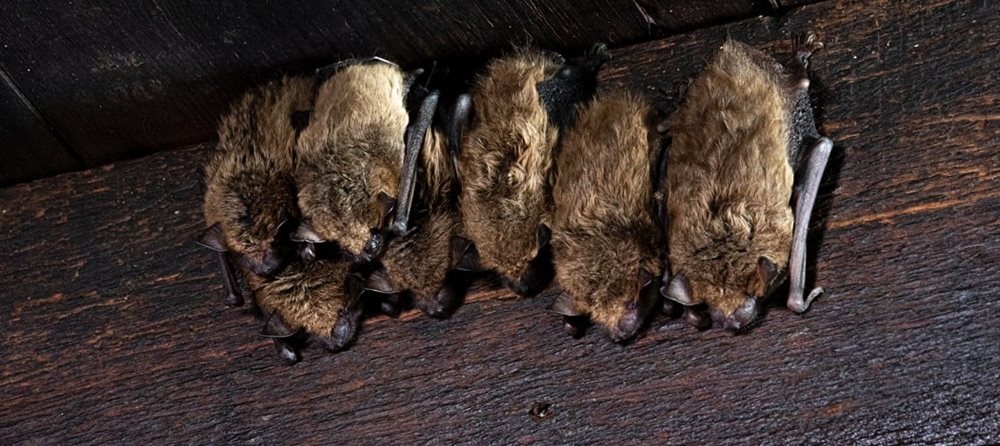
You may notice bats flying overhead at dusk, moving quickly through the sky in search of insects. Their flight patterns and silhouettes are distinct, but many homeowners still aren’t sure what they’re actually seeing. Recognizing a bat can help you quickly identify them, especially if you notice signs of activity around your home.
Bats are unique among mammals, and once you know what to look for, their physical features make them easy to distinguish.
Key Features of Bat Appearance
Most people know what a bat looks like up close from seeing photographs. The key features of bat appearance are different than those of a bird, even though they both fly.
Bats are the only mammals capable of true flight. However, unlike birds, whose wings are primarily made of feathers anchored to bones, a bat’s wings are formed by a thin membrane of skin stretched over elongated finger bones. This structure gives bat wings a flexible, hand-like shape that allows for precise, agile movement in the air.
Also, a bat’s wings are typically dark and slightly curved along the edges. When extended, they create a wide surface area that supports steady flight, even during quick turns and dives.
Most bats have small, compact bodies covered in soft fur. Depending on the species, their fur can appear brown, gray, tan, or reddish. Their faces often include short snouts, dark eyes, and large, upright ears that help them navigate and locate food.
In terms of size, bats vary widely. Many common species measure between 3 and 5 inches in length, with wingspans of 8 to 12 inches. Larger bats can reach wingspans of up to two feet, though these are less commonly seen near homes.
How Bats Compare to Other Flying Animals
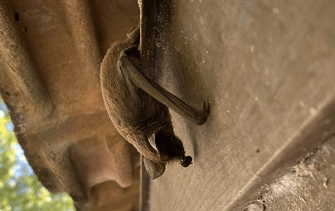
Bats are sometimes mistaken for birds, especially when seen from a distance. However, upon closer observation, their movement and structure are noticeably different.
Birds use their feathered wings to glide in smoother, more predictable patterns. Bats tend to fly in quick, darting motions as they chase insects. Their flexible wings allow them to change direction rapidly, which can make their flight appear erratic.
Because of their size and fur, bats are also occasionally compared to rodents, but while rodents belong to the biological order Rodentia, bats are uniquely members of the order Chiroptera. Their teeth and skeletal structure are adapted for flight, and their diets are not suited to gnawing.
Common Bats Found in the United States
Several bat species are commonly found across the United States, and while they share similar features, a few noticeable differences exist:
- Little Brown Bats are among the most frequently encountered. They are small, with light to medium brown fur and a wingspan of about 8 to 9 inches. Because of their size, they can enter homes through very small gaps and are often associated with attic roosts.
- Big Brown Bats are larger and have a more robust build. Their darker brown coloring and broader wings make them easier to spot in flight. These bats are also known to roost in buildings, particularly in attics and wall voids.
- Mexican Free-Tailed Bats have long, narrow wings and are built for speed. One of their defining features is a tail that extends beyond the wing membrane. They are often seen flying higher and faster than other species, especially in warmer regions.
In most cases, homeowners can identify a bat by its shape, wing structure, and flight pattern.
Where You’re Likely to See Bats
Bats are nocturnal, so sightings usually occur in the evening as they leave their roosts to feed. You may see them flying in looping or zigzag patterns as they hunt for insects.
Although bats are commonly associated with caves, they frequently live in residential areas. Homes can provide ideal roosting conditions, especially in attics, soffits, and rooflines, where it’s dark, warm, and undisturbed.
Because bats can fit through openings as small as half an inch, they can enter through gaps that are easy to overlook. In many cases, homeowners become aware of bats after noticing sounds, staining near entry points, or droppings below rooflines.
Why Bat Activity Becomes a Problem
Seeing bats outdoors is normal and often signals important benefits, as they help control insect populations. However, problems can develop when bats begin roosting inside a home.
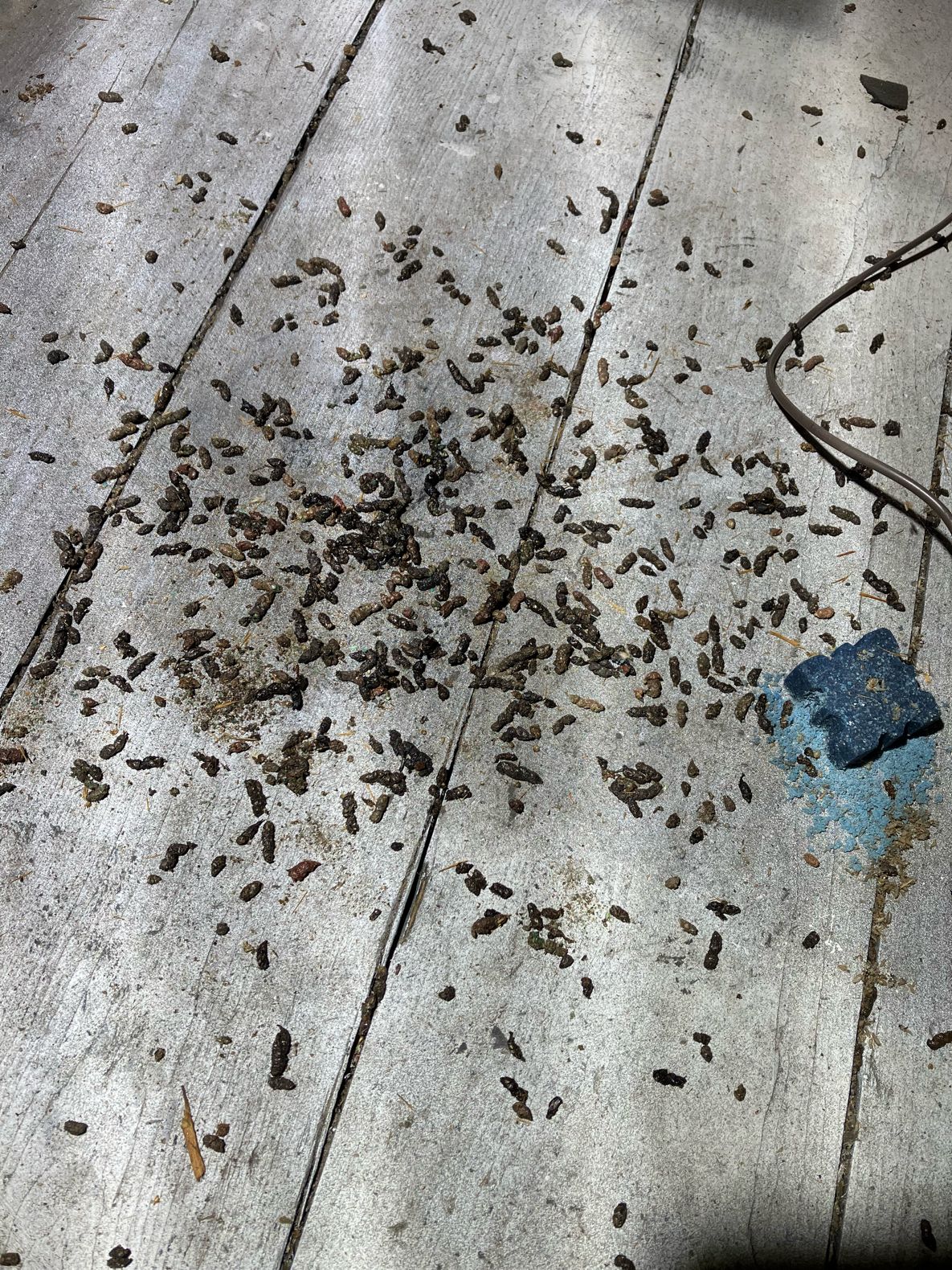
As colonies grow, droppings—known as guano—can accumulate quickly. This buildup can stain exterior surfaces, create strong odors, and, if disturbed, affect indoor air quality.
Bats are also associated with rabies, though transmission is rare. Any situation involving direct contact should be handled with care.
Getting rid of the bat activity early helps reduce the risk of damage and potential health concerns.
When to Call for Professional Help
If you suspect bats are roosting in your home, it’s important to take the right approach. Bats are protected in many areas, and removal must be handled carefully to avoid harming them or creating additional problems. Working with a wildlife expert to remove them early can help limit damage and reduce potential health concerns.
At Critter Control, we use proven exclusion methods to remove bats safely and prevent their return. We identify entry points, seal access areas, and address any residual contamination. If you notice signs of bat activity around your home, our team can help restore a safe, comfortable environment.
Learn more about bat removal.
Get them out.
Keep them out.®
Experiencing a wildlife or pest issue? We can help! Complete this form and your local Critter Control® office will contact you to assist.
- Baby Bats
- Bat Bites
- Bat Facts & Myths
- Bat Guano – Identification & Removal
- Bat Maternity Season
- Bat Noises and Sounds
- Bats & Rabies
- Watch How Bat Removal Works
- What to Do if Bats in Homes
- Bats in Chimneys
- Bats in Roofs
- Bats in the Attic
- Bats in Trees
- Bats in Walls
- Dead Bats
- Bat Diet & Feeding Schedule
- Do Bat Deterrents Work?
- How to Get Rid of Bats in Attic
- Is bat exterminating legal?
- Do Bats Hibernate?
- Types of Bats
- Bat Habitats and Infestations
- Bat Blindness & Echolocation