

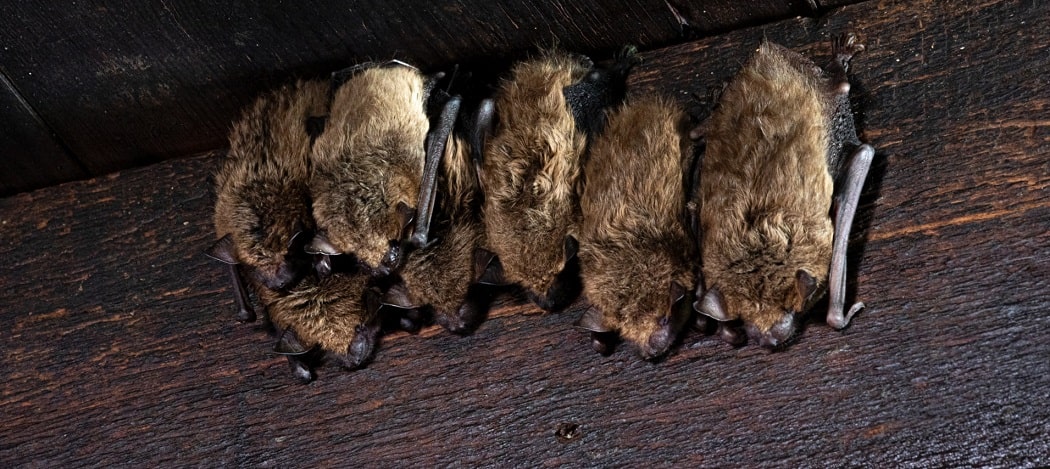
If you have baby bats, also called pups, in your home, it usually means there’s an active colony nearby. Baby bats signal a growing population, so as they mature, you’ll likely notice more bats flying in and out of your home, along with increased noise, mess, and a higher chance of one getting into your living space.
Removal can also become more complicated, which can only be done outside of maternity season. This can mean hiring a professional to ensure legal, safe removal and exclusion practices.
By learning how to identify baby bats in your home, you can act early and reach out for help before the problem turns into a bigger nuisance.
What Do Bat Pups Look Like?
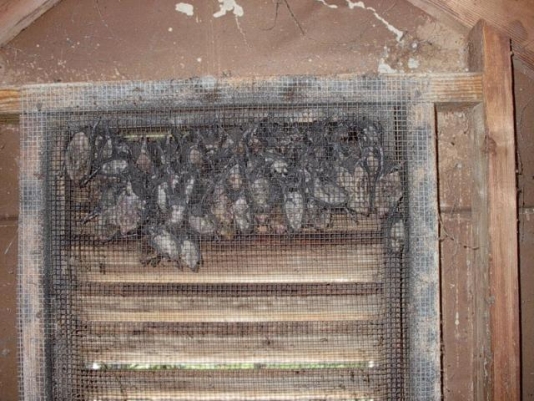
Baby bats look quite different from adult bats, especially right after they’re born. They’re very small, about 2 inches long. They are often about the size of a thumb or smaller, with thin, fragile bodies. Newborns are usually hairless, giving them a pinkish or slightly gray appearance.
Their wings look oversized compared to their bodies and are soft and wrinkled. Their eyes may be closed at first or only partially open, and their ears may appear large relative to their heads.
What Do Juvenile Bats Sound Like?
Baby bats make soft, high-pitched chirping or squeaking sounds, like chirps or peeps. You’ll usually hear these sounds during the day, which is a key clue. Adult bats are mostly quiet while roosting, but babies vocalize frequently to call for their mothers.
The noise may come from walls, ceilings, or attic spaces and can sound constant or increase when the mother bats return at dusk. If there are multiple pups, the sound can resemble faint scratching or chatter. It’s typically lighter and more repetitive than the louder movements or fluttering you might hear from adult bats.
How Do Bat Pups?
Because they can’t fly yet, they are completely dependent on their mother and don’t move much. You’ll usually find them clinging to surfaces or clustered together for warmth and safety. When disturbed, baby bats may wiggle or crawl short distances, but they won’t be able to take flight. As they grow, they become more active, stretching their wings, moving around more, and eventually practicing short flights inside the roost.
What Time of Year Are Bat Pups Present?
Baby bats are typically present in a home during maternity season, which usually runs from late spring through mid-to-late summer. This is typically around May to August in most parts of the U.S., when the weather is warmer. Most mothers give birth to one pup, but sometimes two or three are born.
Baby bats are dependent on their mothers for about 4 to 6 weeks after birth, though the exact time can vary by species. By around 3–4 weeks, the pups start practicing wing movements and short flights, but they often stay in the roost until they’re strong and coordinated enough to leave independently, usually by 6–8 weeks of age.
Why Are Bat Pups in My Home?
Baby bats didn’t come in on their own; they were born there. They are there because adult female bats have chosen it as a safe place to raise their young. Your home provides steady temperatures, shelter from predators, and small entry points that make it easy for them to get in and out.
Is It Safe to Touch or Handle a Juvenile Bat?
No, it’s not safe to handle a baby bat. Even though they’re small and may seem harmless, baby bats can still bite or scratch if they feel threatened. Like adult bats, they can carry diseases such as rabies, and even a tiny bite can pose a risk because it may be hard to see or feel.
There’s also a risk to the bat. Baby bats are very fragile, and handling them can easily injure or stress them. If you find one in your home, avoid direct contact. If it’s in a living space, you can isolate the area and contact a wildlife professional for safe removal.
Are There Laws Regarding Bat Pup Removal?
Yes, in many cases, baby bats are protected under state or federal wildlife laws, depending on the species and location. Common bat species, such as little brown bats and Indiana bats, are protected because their populations have declined due to habitat loss and diseases like white-nose syndrome. This protection often applies to the entire colony, including the pups.
Disturbing or killing bats, or destroying a maternity roost, can be illegal and may carry fines or other penalties. Even when removal is necessary, it must usually be done by a licensed wildlife professional at the proper time of year to avoid harming the babies.
What To Do If I Find a Bat Pups in My Home or Yard?
If you find a baby bat in your home or yard, it’s important to handle the situation safely, for both you and the bat.
- Do not touch it with your bare hands. If you must move it, wear thick gloves.
- If it is in your yard, leave it alone. The mother may be nearby and will return to care for it.
- If it is in your home, close off the area and leave a window or door open so it can fly back out or the mother can get it.
- Contact a wildlife professional for help.
How Wildlife Experts Can Help Remove Baby Bats
You should call a wildlife professional, like those at Critter Control, to remove baby bats for the following reasons:
- Safety: Professionals have the proper equipment and training to avoid bites, scratches, or exposure.
- Timing: Professionals know the correct timing for safe exclusion.
- Legal Protection: Professionals know the legal requirements for safe removal.
Call Critter Control experts today. They can locate the roost, seal entry points correctly, and prevent future infestations without harming the bats or breaking any laws.
Get them out.
Keep them out.®
Experiencing a wildlife or pest issue? We can help! Complete this form and your local Critter Control® office will contact you to assist.
- Bat Bites
- Bat Facts & Myths
- Bat Guano – Identification & Removal
- Bat Maternity Season
- Bat Noises and Sounds
- Bats & Rabies
- Watch How Bat Removal Works
- What to Do if Bats in Homes
- Bats in Chimneys
- Bats in Roofs
- Bats in the Attic
- Bats in Trees
- Bats in Walls
- Dead Bats
- Bat Diet & Feeding Schedule
- Do Bat Deterrents Work?
- How to Get Rid of Bats in Attic
- Is bat exterminating legal?
- Do Bats Hibernate?
- Types of Bats
- What Does a Bat Look Like?
- Bat Habitats and Infestations
- Bat Blindness & Echolocation